"$2 Each or 3 for $5": How a Kid Can Set a Price They Can Say Out Loud
How a kid can set a price they can say out loud, using the $2 or 3 for $5 price our family started with. The math, the sign and what we can't prove.
BiteSizeLaunch team5 min read


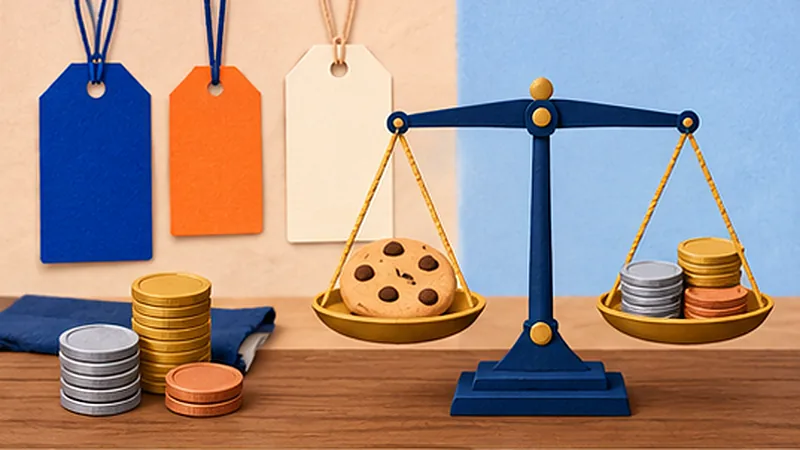
When our family started a button business, the first price was $2 for one button or $5 for three. A child could say it in one breath.
We have no sales log from that first table, so we cannot tell you the bundle sold more buttons. We would rather say that than make up a result. What we can show you is the math behind the price, how to set one you can say out loud, and how to find out if it works.
What the bundle does
Three single buttons cost $6. The bundle costs $5, so the customer saves $1, which is about 17 percent. Each button in the bundle brings in $1.67.
Now look at it from the seller's side, using the practice figure in our blueprint: a $30 refill of 200 sets works out to 15 cents in parts a button. A single leaves $1.85 after parts. A bundle of three leaves $4.55 in total, or $1.52 a button.
A customer who came for one button and leaves with three spends $3 more. You make two extra buttons for about 30 cents in parts and a few more minutes at the press. That is the reason bundles are worth offering, and the reason they are not free: each button earns less than a single, so a press takes longer to pay for itself. With a $120 press as an example price, that is about 65 single sales or about 80 buttons sold in bundles.
Why the numbers are easy to say
Two things about "$2 each, $5 for three" help a child.
It has two numbers and no cents. A child under pressure at a fair table does not have to work out a price. The sign does it.
It matches the bills in a customer's wallet. One button takes two singles, and three buttons take one $5 bill. Making change is often the hard part of cash selling, and a $5 bill for three buttons mostly avoids it. A customer who pays for one button with a $5 bill needs $3 back, so the table needs a float. We suggest starting with a $20 to $30 float.
Three ways to set a price
The U.S. Small Business Administration has a free pricing worksheet that describes three starting points. Here is each one, applied to a child's table.
Cost-based. Start with what each button costs you. The worksheet's warning is plain: if your total cost per unit is more than your price, your business is losing money. In our example, button parts come to about 15 cents. Add paper, ink, any table fee and your time before you compare the total with $2. Your price should never sit under your total cost.
Competition-based. Look at what similar things sell for at fairs and markets near you. A button sold at a school fair may go for a different price than a button at a craft market. Visit one before you pick.
Customer-based. This asks what your customers can and will pay. One of the worksheet's research ideas is to measure the effect of prices, which means trying a price and watching what happens. That is the one we can help with, below.
The worksheet also notes that price is the only one of the four parts of the marketing mix that brings in money. The other three cost money.
Say it out loud before the fair
Most of the work is practice. Have the child say the price to a parent five times, in a normal voice, then say it to a neighbor. When a child offers buttons to neighbors, with a parent along, the script we use puts the price right before the ask: "It's two dollars. Would you like one?"
The sign does the rest. Our blueprint says to show a finished sample and a readable price, so people understand what you sell without a long explanation. The sign copy we suggest is "Custom button pins, made while you wait" and "$2 each, $5 for three."
Find out if it works
One problem to watch for: people look and do not buy. The price may be unclear, or too high for the setting. First put the price on a sign people can see and check the design and the table. If lookers still do not buy, try a lower price at the next event. Selling out early at every event can mean the price is too low.
To learn from your own table, write down one line per event in a notebook: the price, how many people stopped, how many bought one button and how many bought three. After two or three events you have your own numbers to go on.
Change one thing at a time. If you change the price and the sign together, you will not know which one made the difference.
Money and taxes
Keep the cash with a parent and save the receipts for supplies. If sales become regular, ask a tax professional what to report. We cannot give tax or legal advice here.
Where BiteSizeLaunch fits
The Buttonology blueprint includes a price planner where you fill in your own costs, time and price for an order. It is a digital guide. It does not include a press or supplies.
If you want a story to start with, our free guide, BiteSize Classics, is an illustrated story your family reads together. The quiz can help you choose a blueprint.
Share this article